
Home / Recipes & News / A young cheese is not such a bad idea
A young cheese is not such a bad idea
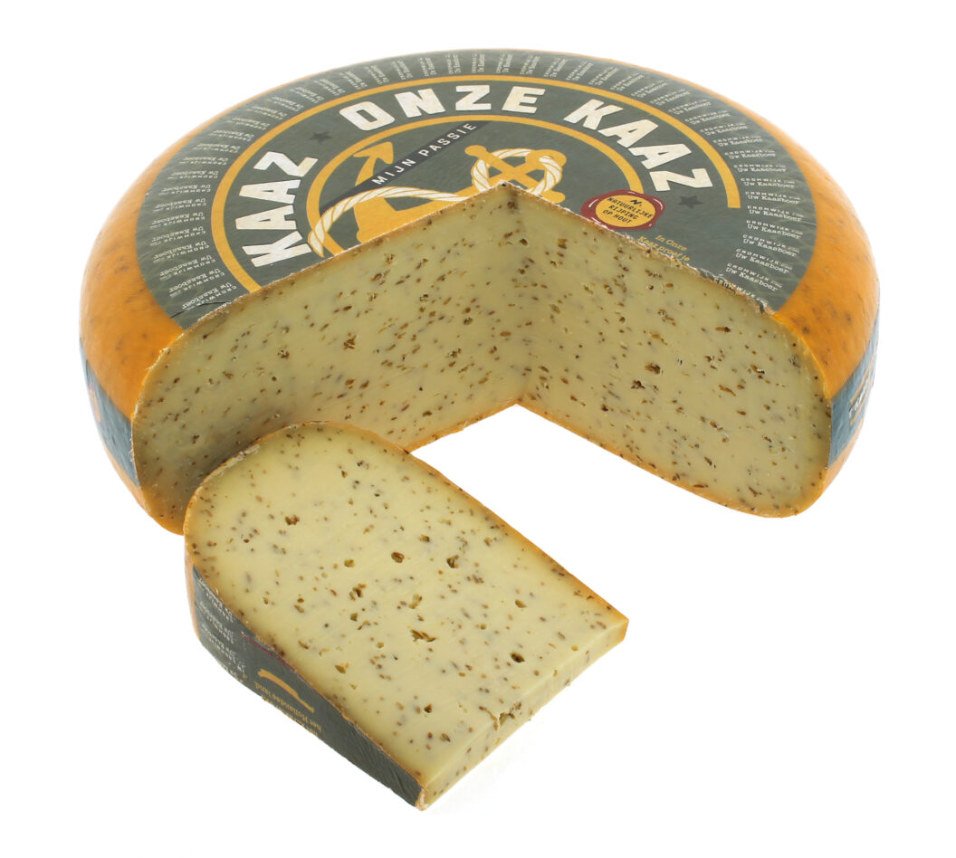

If you look at our website you come across the terms everywhere: young cheese, young matured, matured, extra matured, old and vintage cheese.
We have already put a number of these cheeses in the spotlight. Old and vintage cheeses even have their own page. We have written a blog about matured cheese.
But a really tasty young cheese with a creamy flavour may seem to stay a little out of view because of that, while it is exactly that kind of cheese that is lovely to melt on a pizza or in a toastie. What is more, that kind of cheese is a favourite with a great many people.
Different degrees of maturing
Shall we first run through how old cheeses have to be to be called young or young matured, and then name the other ages straight away?
- Young cheese: 4 to 6 weeks old
- Young matured cheese: 6 to 10 weeks old
- Matured cheese: 10 to 17 weeks
- Extra matured cheese: 17 to 24 weeks
- Old cheese: 35 to 52 weeks
- Vintage cheese: 52 to 70 weeks
So just for convenience: only vintage cheese is more than a year old. A cheese is ripe after four weeks, and after 6 weeks a young cheese already becomes a young matured cheese. The rest sit somewhere in between. Cheeses are matured on thick planks and turned regularly. As the cheese matures it loses a little in size and weight. A slightly older cheese is therefore a little more expensive per kilo than a young cheese. An older cheese also develops some salt crystals, which are not present in younger cheese. That sometimes makes an older cheese a bit more intense to eat than its younger brother. An old or vintage cheese also becomes a little less creamy. So you see: choosing a young cheese is not such a bad idea.
Buying young cheese
A cheese may be called young when it is between 4 and 6 weeks old. The young cheeses you can order from us come in all sorts and sizes. The standard cheese is one from the Onze Kaaz series and is a 48+ cheese. You can also order a young farmhouse cheese from us, made with raw milk. On top of that we have a young cumin cheese as well. For convenience we will list them below one another.
- ONZE KAAZ Jong 48+
- De Boeren Schat Jong (Onderwater) 48+ (RM) (B)
- ONZE KAAZ Komijn Jong 48+
In spring we also have delicious graskaas available. It is made from the milk of cows that eat grass outdoors and, certainly in spring, it carries the same feeling about it as, say, the first asparagus. Graskaas is a cheese for celebrating the new spring a little and is traditionally a young cheese.
Buying young matured cheese
Young matured cheese is also a very popular cheese to order. It still melts perfectly well but has a slightly firmer taste. So this kind of cheese is something of an all rounder.
We have a number of different kinds: two from the Onze Kaaz series (48+ and 35+ versions) and a popular farmhouse cheese and farm cheese. Would you prefer a cheese with cumin? We have that in the young matured variety too. If you would like to try a unique taste, we recommend a young matured goat cheese.
Here they are in a row:
- ONZE KAAZ Jong Belegen 48+
- ONZE KAAZ Jong Belegen 35+
- Jong belegen boerenkaas van Boer Mulder
- De Boeren Schat Jong Belegen (Van Erk) 50+ (GT)
- ONZE KAAZ Komijn Jong Belegen 48+
- Geitenkaas Jong Belegen
So you see: when it comes to a tasty cheese, young and young matured cheese are very interesting indeed. Certainly where price is concerned, and the ease with which they melt on a good pizza or on top of a nice bake. What is more, these cheeses do not yet have salt crystals and are therefore a little softer in the mouth as far as taste goes. A number of good reasons to keep a piece of younger, creamy cheese in the fridge as a matter of course.